

Data Science vs Data Analytics: What’s the Difference, Really?

Paras D.

Jan 01, 2026

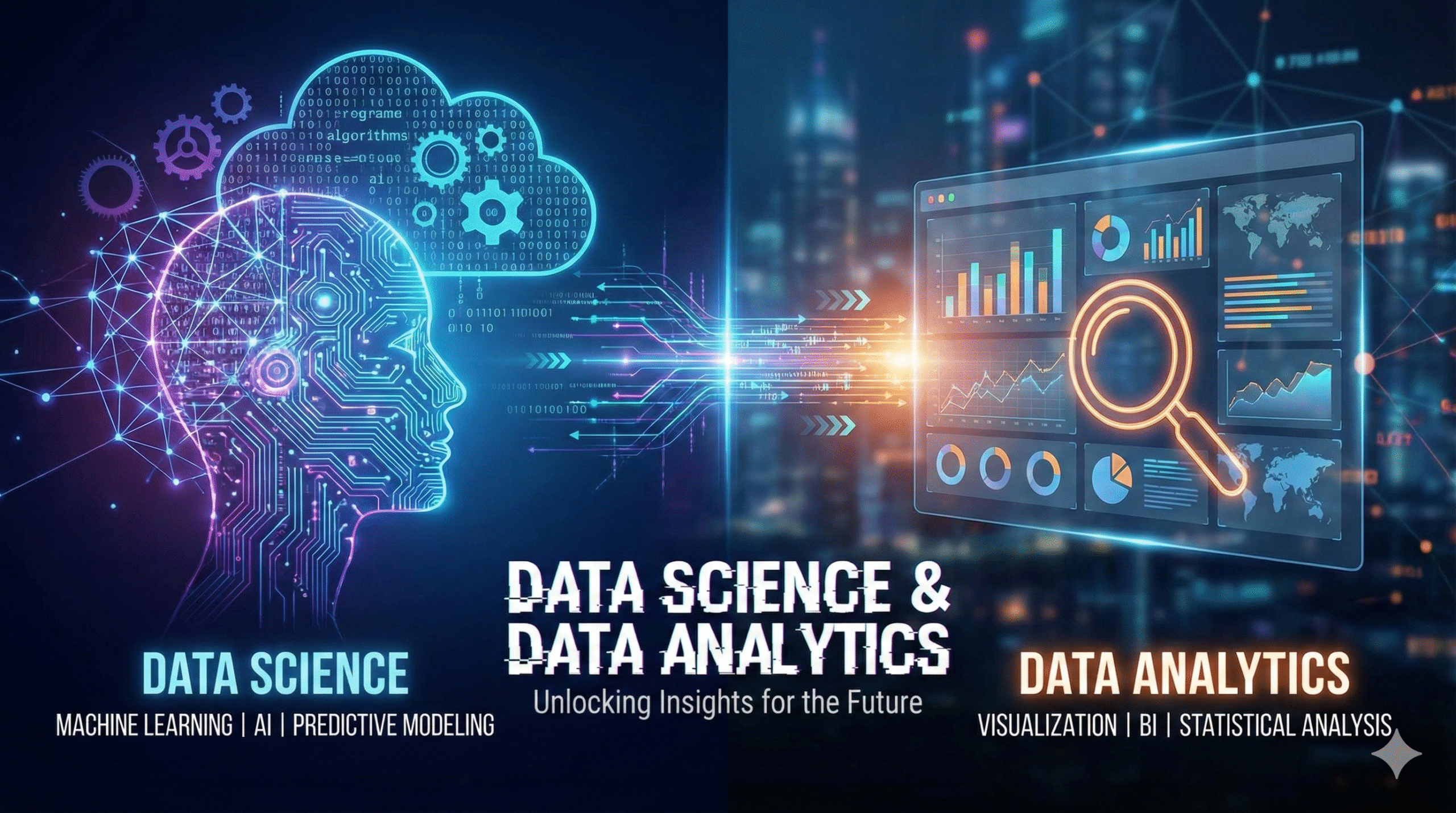
Data quietly runs everything. Product decisions. Revenue forecasts. User experience. Infrastructure planning.
Behind most data-driven products sit two closely related but very different disciplines: Data Science and Data Analytics. They often get bundled together, but they solve different problems and deliver different value.
This post breaks down both fields using simple, real-world project examples — the kind teams actually build — so the difference is clear in practice, not theory.
What Is Data Science?
Data Science focuses on predicting future outcomes using data.
It blends statistics, programming, machine learning, and domain knowledge to build models that learn from historical patterns and make decisions or forecasts.
Example: Predicting Customer Churn for a Subscription App
A fitness app notices users dropping off every month. The business wants to know who is likely to churn next so it can intervene early.
A data science team trains a machine learning model on past user behavior and predicts which users are at risk next month.
That prediction powers retention campaigns, personalized nudges, or pricing experiments.
This is Data Science in action.
What Is Data Analytics?
Data Analytics focuses on understanding what already happened and why.
It examines data, finds patterns, and communicates insights through reports and dashboards that teams can act on.
Example: Monthly Sales Dashboard for a Retail Chain
A retail brand wants answers:
- Which products sold best this month?
- Which city performed highest?
- Why did sales dip in week three?
A data analyst cleans the data, runs queries, and builds a Power BI dashboard that makes trends visible and explainable.
This is Data Analytics at work.
Key Differences at a Glance
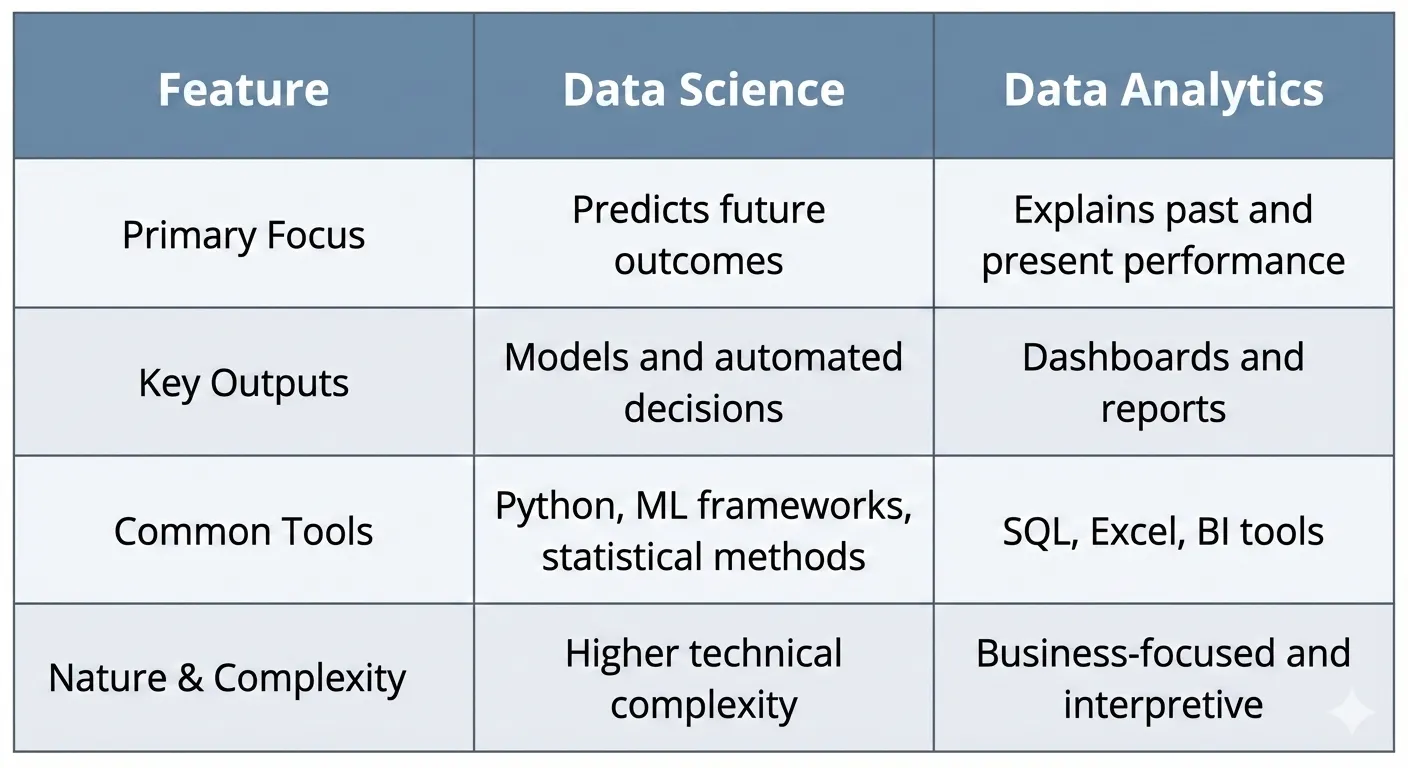
Both are critical. They just answer different questions.
How Data Science Works
Project: Customer Churn Prediction
A subscription app collects:
- App usage frequency
- Session duration
- Subscription type
- Support tickets
- In-app purchases
Applied workflow
- Collect and label historical data
- Clean inconsistencies and missing values
- Engineer features like recent activity or inactivity gaps
- Train models such as Random Forest or XGBoost
- Evaluate accuracy and recall
- Deploy predictions so teams get daily churn-risk lists
Companies like Netflix and Spotify run variations of this exact pipeline to retain users and personalize experiences.
How Data Analytics Works
Project: Retail Performance Dashboard
A supermarket chain tracks:
- Daily revenue
- Products sold
- Store location
- Discounts and footfall
Applied workflow
- Extract data from POS systems and databases
- Clean and merge datasets
- Analyze trends and anomalies
- Visualize metrics in dashboards
- Share insights with marketing and operations
Insights might reveal weekend spikes, underperforming stores, or pricing strategies that lift sales.
Brands like Walmart and Starbucks rely heavily on this layer to guide operations.
Process Flow: Prediction vs Explanation
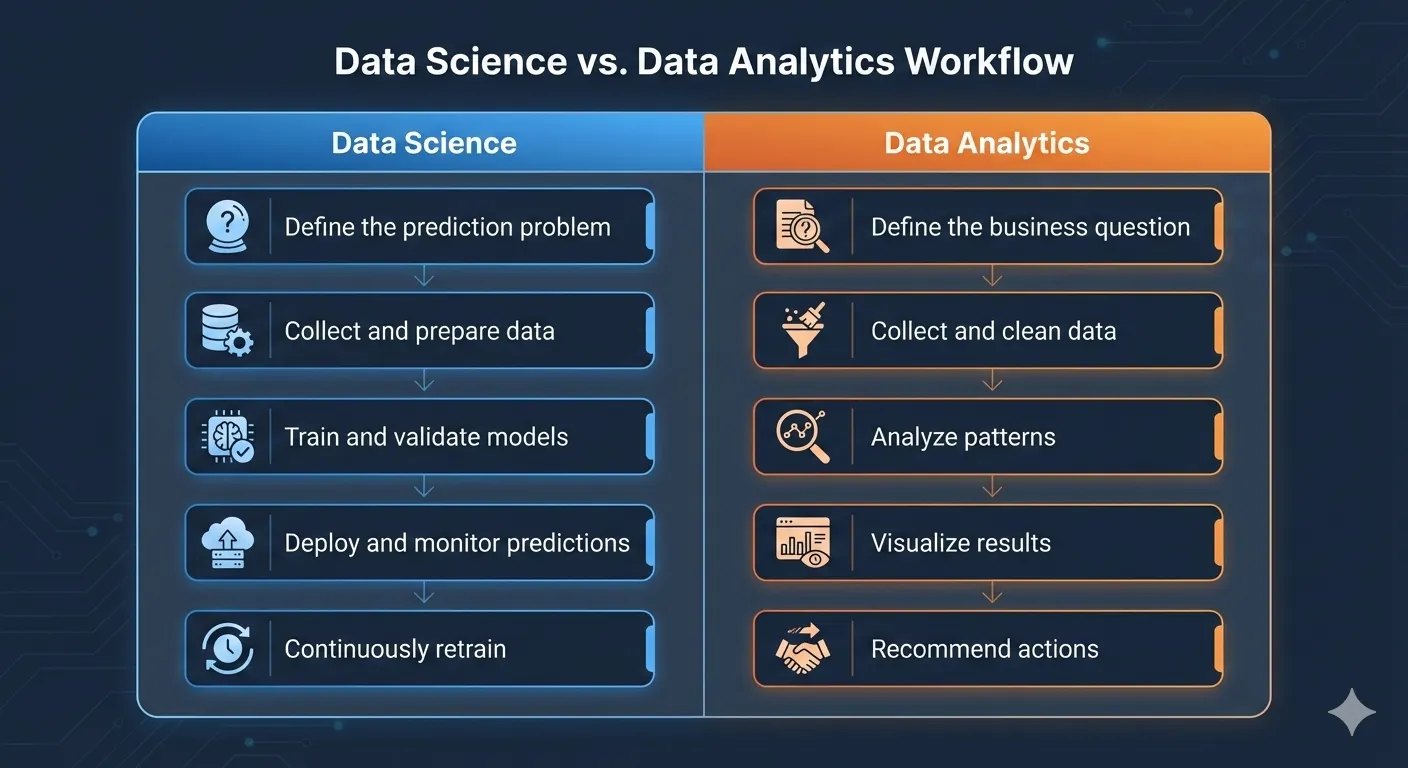
Different paths. Different outputs. Same goal: better decisions.
Future Scope
Data Science is expanding into real-time personalization, automation, and predictive systems across healthcare, fintech, and retail.
Data Analytics is becoming standard across organizations as dashboards replace intuition and gut-feel decisions.
Both roles will remain core to product and business teams for the next decade and beyond.
Closing Thoughts
Data Analytics helps teams understand what happened and why. Data Science helps teams predict what will happen next.
Strong products usually need both. One explains the story so far. The other writes the next chapter.